Imagine this: you’ve spent months researching your dream home on Mexico’s Pacific coast. It’s perfect: ocean views, a spacious terrace, and a price that fits neatly into your budget. You’ve done the calculations, spoken to realtors, and even visualized where you’ll sip your morning coffee. But just as you’re about to transfer your deposit, something unexpected happens.
The exchange rate shifts.
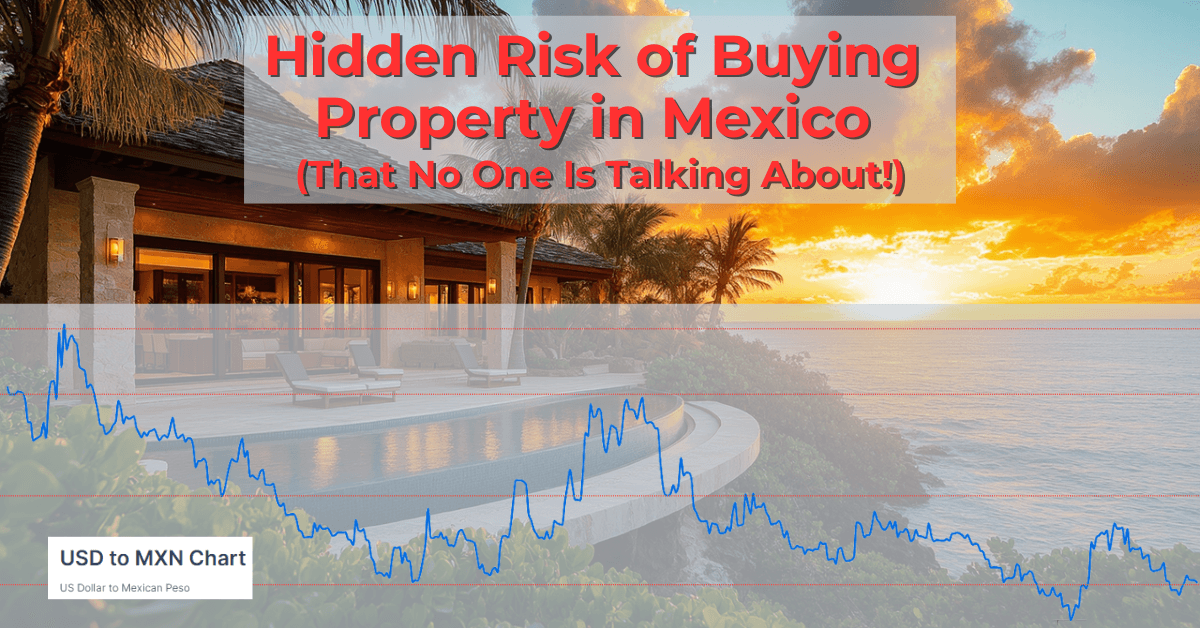
Overnight, your dream home just became thousands of dollars more expensive, not because the seller raised the price, but because of a change in the currency markets. If you’re buying property in Mexico with U.S. or Canadian dollars, fluctuations in exchange rates can dramatically impact what you pay. And yet, many buyers overlook this factor, assuming their bank will handle the conversion with little to no consequence.
The truth? Banks, slow transactions, and poor timing can all lead to unnecessary losses. And these losses aren’t small. Depending on the size of your purchase, they can cost you the price of a brand-new car, a major renovation, or months of living expenses in Mexico.
But here’s the good news: smart strategies exist to protect your purchase. In this article, we’ll break down how exchange rates affect your property purchase and, more importantly, how you can secure the best rate and avoid costly mistakes.
1. The Role of Exchange Rates in Real Estate Transactions
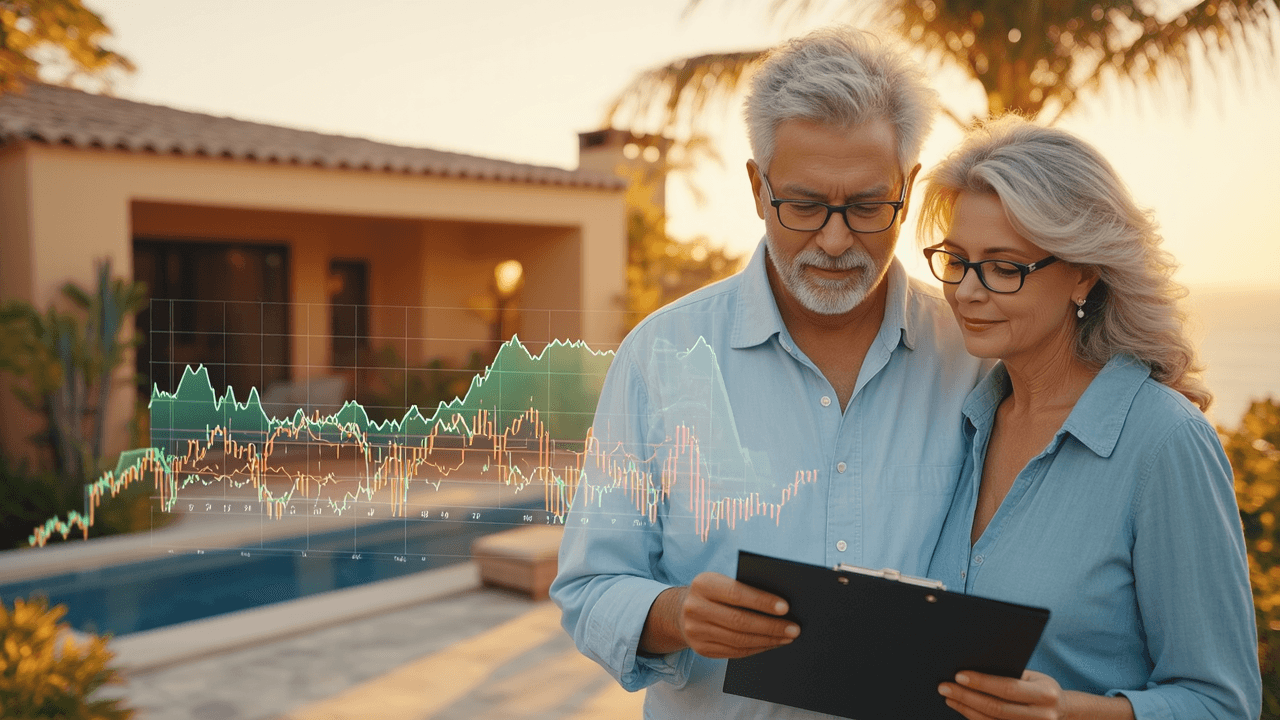
Let’s step into the shoes of Mark and Lisa, a retired couple from Vancouver who found a stunning condo in Puerto Vallarta. When they first toured the property, it was listed at 5,000,000 MXN, which at the time translated to approximately $350,000 CAD. Excited to secure their dream home, they placed a 10% down payment of $35,000 CAD, with the remaining 90% due at closing in three months.
Feeling confident, they assumed their final payment would remain close to $315,000 CAD. After all, how much could the exchange rate really change in three months?
A Costly Currency Shift
What Mark and Lisa didn’t anticipate was how quickly exchange rates could shift. Over the course of those three months, the Canadian dollar lost 10% of its value against the peso. By the time they were ready to complete the transaction, that remaining balance of 4,500,000 MXN no longer cost them $315,000 CAD. It now required $346,500 CAD.
That’s an unexpected $31,500 CAD extra, all because of exchange rate fluctuations. That money could have covered new furniture, renovations, or even an entire year of living expenses in Mexico. Instead, it vanished, simply because they didn’t plan for currency risk.
Why Do Exchange Rates Fluctuate?
Exchange rates aren’t static. They’re constantly influenced by various factors:
- Global market conditions: economic changes in Canada, the U.S., or Mexico affect currency values. A drop in oil prices, for example, can weaken the Canadian dollar.
- Political and economic stability: uncertainty in Mexico or Canada can cause investors to shift money between currencies, affecting their values.
- Interest rate decisions: central banks influence currency strength through interest rates. A rate hike in Mexico can make the peso stronger against the CAD.
For expats and real estate buyers, timing is everything. If you don’t secure an exchange rate early, you’re playing a high-stakes game, one that can cost you thousands.
What Can You Do?
- Monitor the market: use currency tracking tools to watch for fluctuations before making large transfers.
- Lock in a rate early: forward contracts allow you to fix an exchange rate in advance, ensuring price stability.
- Work with a specialist: banks often charge high fees and offer poor exchange rates. A professional currency exchange service can save you thousands by offering better rates and structured transfer options.
Think of exchange rates like ocean tides. If you don’t time your entry carefully, you might get swept away by an unexpected wave. But with the right strategy, you can ride the current to your advantage.
2. The Hidden Costs of Bad Exchange Rates
For many real estate buyers, the exchange rate is an afterthought, until it suddenly isn’t. The difference may seem minor when exchanging a few hundred dollars for a vacation, but when purchasing property, even a small fluctuation can translate into thousands of dollars lost.
The True Cost of Bank Exchange Rates
Most buyers instinctively turn to their home bank for currency exchange and international transfers. After all, banks are safe, reliable, and easy to use. But here’s what they don’t tell you:
- Banks charge a “spread” on the exchange rate. This is the difference between the rate they buy the currency at and the rate they sell it to you. Banks typically build 2% or more into their exchange rate.
- Hidden transaction fees are often applied on both ends of the transfer, increasing costs even further.
Example: The Hidden Fees That Added Up
Let’s say Mark and Lisa had made their property purchase through their home bank instead of exploring other options. In addition to losing $31,500 CAD due to the currency shift, their bank also charged them:
- A 2.5% exchange rate markup, adding another $8,662 CAD in losses.
- A $50 CAD wire transfer fee per transaction, potentially applied on both the sending and receiving ends.
By the time the dust settled, they had paid nearly $40,000 CAD more than they originally planned.
That’s the price of not optimizing currency exchange.
Tourist Rates vs. Real Market Rates
Another mistake many buyers make is assuming all exchange rates are the same. They see the rate posted at an airport kiosk, a hotel, or on a travel website and think that’s what they’ll get for a large transaction. In reality, the posted “tourist rate” is usually far worse than what’s available through professional exchange services.
Think of it like this: if you went to buy a car and the dealer told you that the price changes randomly every hour, you’d probably look for a way to lock in a fair deal before purchasing. The same applies to currency exchange.
How to Avoid Losing Money on Bad Exchange Rates
Instead of relying on banks or assuming exchange rates will stay stable, property buyers can take proactive steps to reduce uncertainty:
- Use a currency exchange specialist: instead of accepting a bank’s high-margin rate, use a specialized currency provider with better rates and lower fees.
- Consider forward contracts: if you know you’ll need to make a large transfer in the future, locking in today’s rate can prevent unexpected costs.
- Plan your transfers in advance: avoid large last-minute conversions when rates are unpredictable. Monitor the market or set up rate alerts to transfer at the best time.
Why Paying Attention to Exchange Rates Can Save You Thousands
Exchange rates are not just numbers on a screen. They directly affect the final price of your property. Ignoring them can result in unnecessary losses, while planning ahead can help you keep more of your money for what really matters: enjoying your new home in Mexico.
3. How to Secure the Best Exchange Rate for Your Property Purchase
Now that we’ve seen how fluctuating exchange rates can unexpectedly increase the cost of your home in Mexico, let’s talk about how you can take control of the process and avoid unnecessary losses.
Timing Matters: When and How to Exchange Currency Wisely
Exchange rates go up and down based on supply, demand, and global events. While it’s impossible to predict every fluctuation, there are strategies to protect yourself from costly shifts.
Strategy 1: Lock in Your Rate with a Forward Contract
One of the smartest moves a property buyer can make is using a forward contract, a tool that lets you lock in an exchange rate for a future date, no matter how the market moves.
Example: let’s go back to Mark and Lisa. Imagine if, instead of leaving their final payment exposed to currency fluctuations, they had locked in their exchange rate right after paying the down payment. Even though the exchange rate dropped over the next three months, they would still have paid the original amount they budgeted for.
A forward contract gives you certainty on the amount you lock, so the exchange rate can’t surprise you at closing on those payments.
Strategy 2: Use Market Orders to Automate Your Transfers
If you’re not in a rush to exchange your money, you can set a market order: a request to exchange your currency only when the rate hits your target price.
Let’s say the exchange rate is currently 14.3 MXN to 1 CAD, but you want to wait until it reaches 15.0 MXN to 1 CAD to get more value. Instead of watching the market every day, a currency specialist can automatically execute the trade when your target is reached.
Market orders are great for buyers who:
- Have time to wait for an optimal rate
- Want to maximize savings on large transfers
- Prefer to remove guesswork from the process
Strategy 3: Avoid Using Banks for Large Transfers
As we covered earlier, banks are notorious for offering poor exchange rates and adding hidden fees. Instead, work with a currency exchange provider that specializes in international property transactions.
- Better exchange rates: you’ll typically get rates closer to the real market rate instead of inflated bank prices.
- Lower fees: many providers charge little to no transfer fees, saving you even more.
- Expert guidance: currency specialists help you plan rather than just executing a transaction.
Example: the bank vs. a currency exchange service. Let’s say you’re transferring 4,500,000 MXN for your final property payment:
| Service | Exchange Rate | Amount Paid (CAD) | Hidden Fees | Total Cost |
|---|---|---|---|---|
| Bank | 13.9 MXN to 1 CAD | $323,741 CAD | $200+ in fees | ~$324,000 CAD |
| Currency exchange service | 14.5 MXN to 1 CAD | $310,345 CAD | Shown up front | $310,345 CAD plus any fees shown up front |
In this illustration, the better exchange rate alone makes a difference of about $13,400 CAD.
Strategy 4: Monitor the Market and Set Alerts
One of the best ways to stay ahead of currency fluctuations is to set up exchange rate alerts. These notifications tell you when rates hit your desired level, so you can act quickly.
Where to set up alerts:
- Currency exchange providers often offer rate alert tools.
- Apps like Xe, Wise, and OFX allow you to track trends.
- Working with a specialist can help you identify the best timing.
Take Control of Your Exchange Rate
Exchange rate uncertainty doesn’t have to be a risk. You can take control and protect your purchase by choosing the right strategies:
- Lock in a rate with a forward contract to avoid surprises.
- Use market orders to wait for the best possible rate.
- Work with a currency exchange service instead of banks.
- Monitor the market and set alerts to act at the right time.
Conclusion: Take Control of Your Exchange Rate
Buying property in Mexico is an exciting milestone, but currency exchange fluctuations can make or break your budget if you’re not prepared. As we’ve seen, something as small as a 10% shift in exchange rates can add tens of thousands of dollars to your final cost, an expense most buyers never anticipate.
But here’s the good news: you don’t have to leave your exchange rate to chance. By taking simple, strategic steps, you can lock in the best rates, avoid unnecessary losses, and keep more money for what truly matters: your new home and lifestyle in Mexico.
Key Takeaways
- Exchange rates fluctuate, and timing matters. Securing a rate early can protect you from costly surprises.
- Banks aren’t your best option. They often charge higher fees and offer worse exchange rates than specialized currency services.
- Forward contracts can protect you from rate swings. Locking a rate fixes the dollar cost of each payment you lock, so you avoid last-minute currency shocks.
- Monitoring the market and planning ahead can save you thousands. Tracking trends and using professional services keeps your purchase on budget.